
Curated Collections · 30 artworks · Created April 6, 2026

The Mending Thread

Restoration, Resilience, and the Quiet Art of Healing.

Read it as a book

Download the set in 4K — or open it in the MP Art app to send straight to your Frame

The Mending Thread

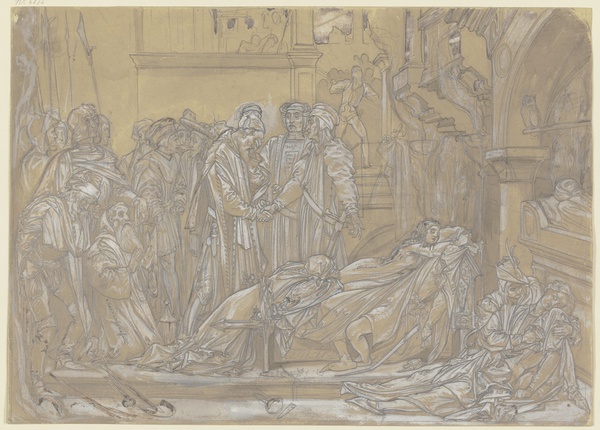
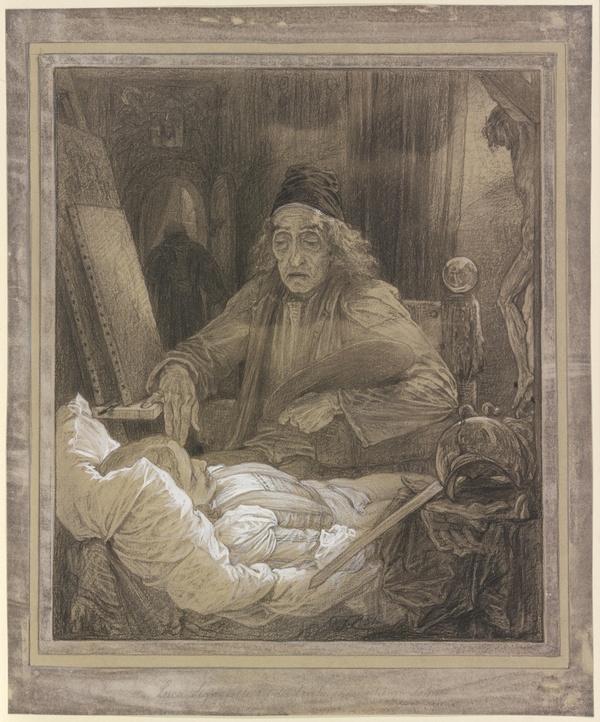
The human experience is often a tapestry of both splendor and rupture, where moments of profound breakage demand a slow, deliberate mending. Our journey begins in the shadow of irreparable loss, captured in Frederic Leighton’s poignant The Reconciliation of the Montagues and Capulets over the Dead Bodies of Romeo and Juliet. Here, ultimate tragedy forces a societal healing, a painful convergence born from shared grief. Similarly, Frederic Leighton’s deeply personal Luca Signorelli Painting his Dead Son reveals the artist’s quiet resolve to confront, to document, and perhaps to process an unfathomable sorrow through the very act of creation.
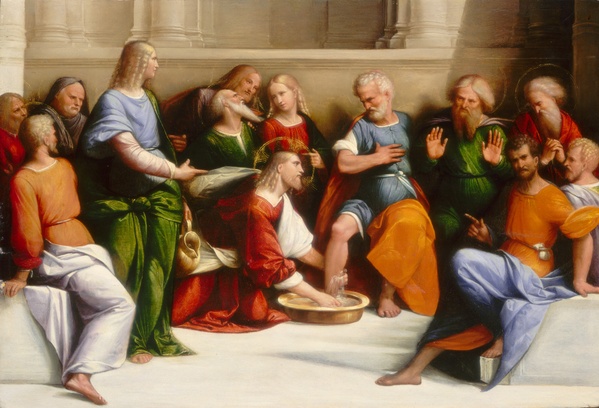
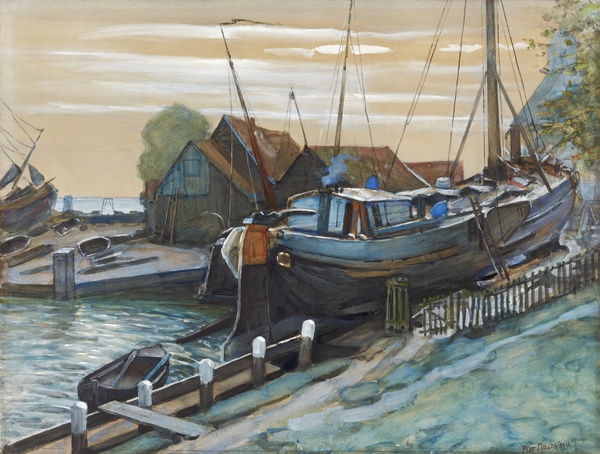
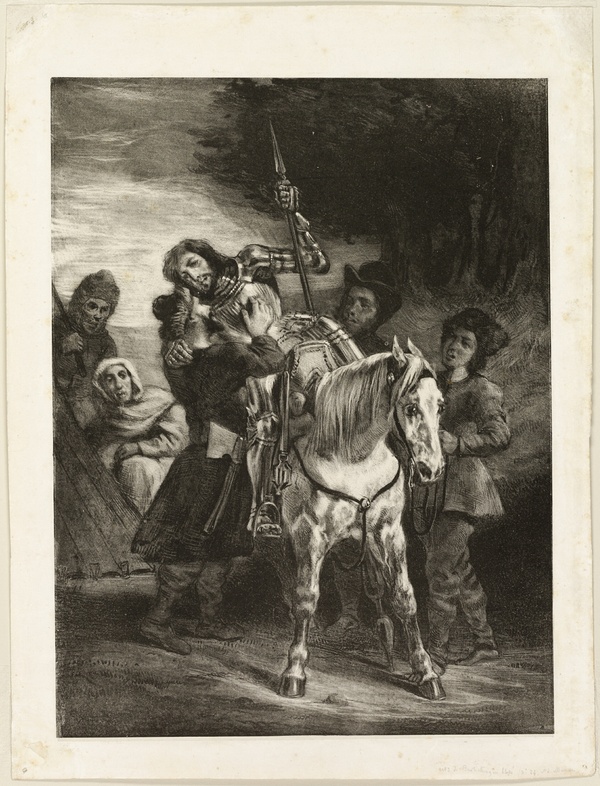
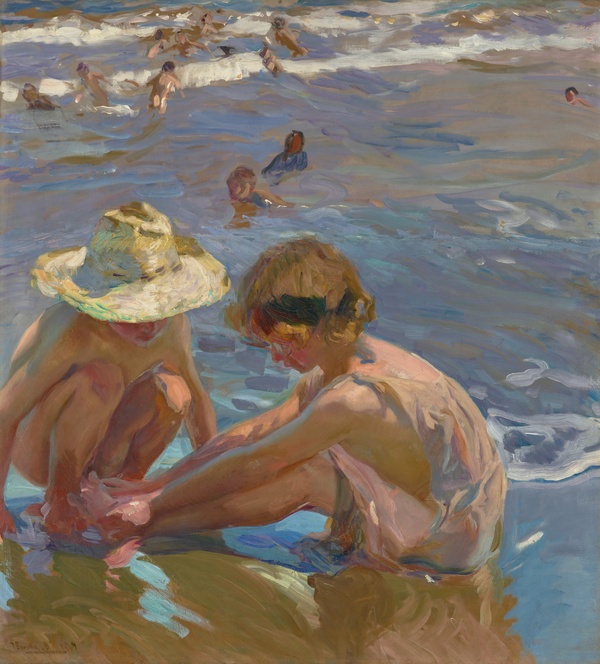
From these grand narratives of grief, we turn to the intimate acts of immediate care. Eugène Delacroix's The Wounded Goetz Cared for by the Bohemians offers a scene of compassionate intervention, where strangers tend to a wounded knight, symbolizing communal healing. Joaquín Sorolla’s sun-drenched The Wounded Foot echoes this vulnerability in childhood, a tender moment of care on a sunlit beach. Garofalo’s exquisite Christ Washing the Disciples' Feet elevates service to the sacred, a humble act of purification and spiritual restoration. Even the industrial precision of Piet Mondrian’s Drydock at Durgerdam speaks to purposeful repair, preparing vessels for future journeys, a testament to practical restoration.
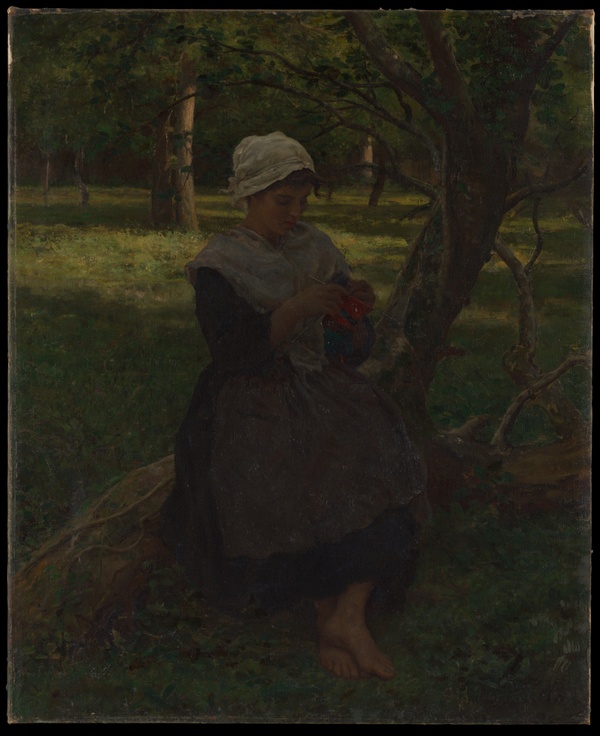
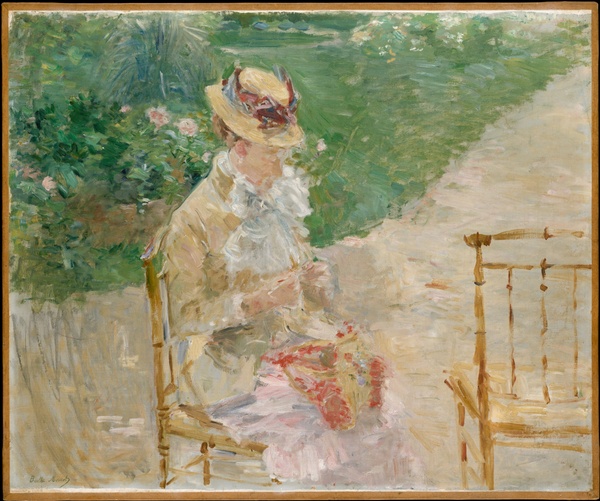
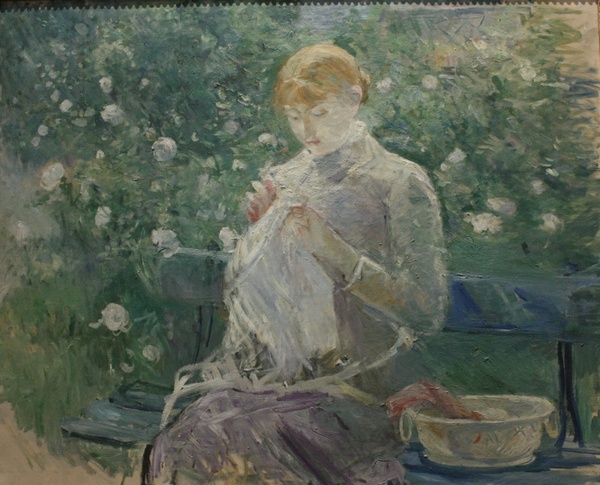
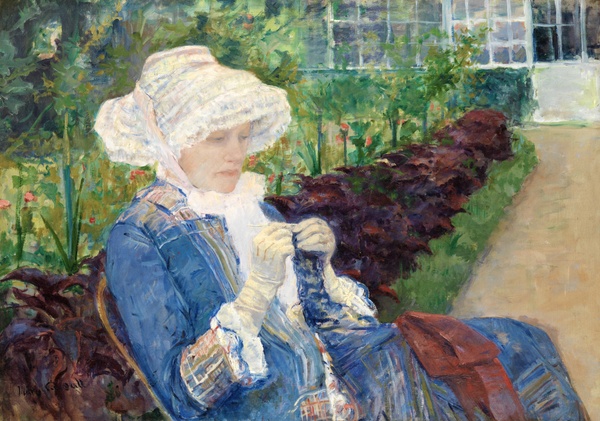
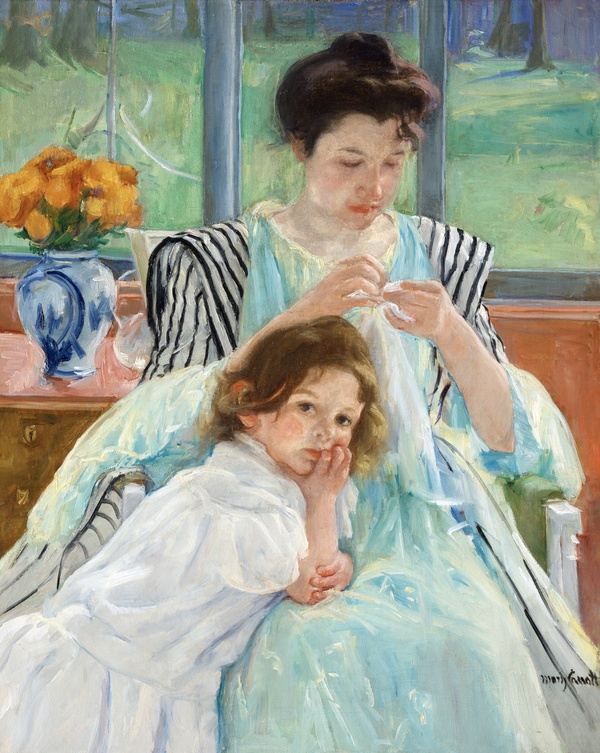
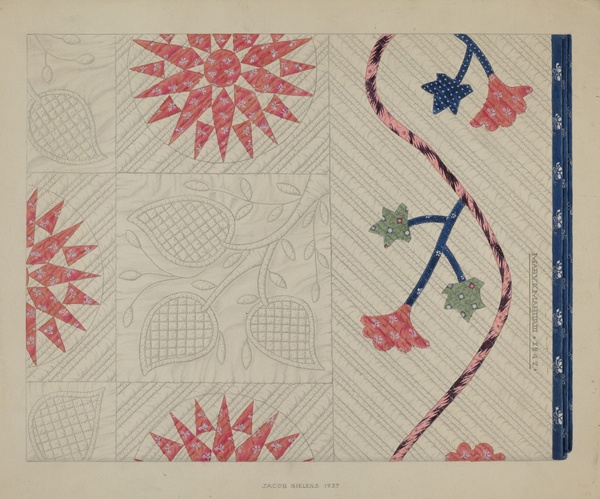
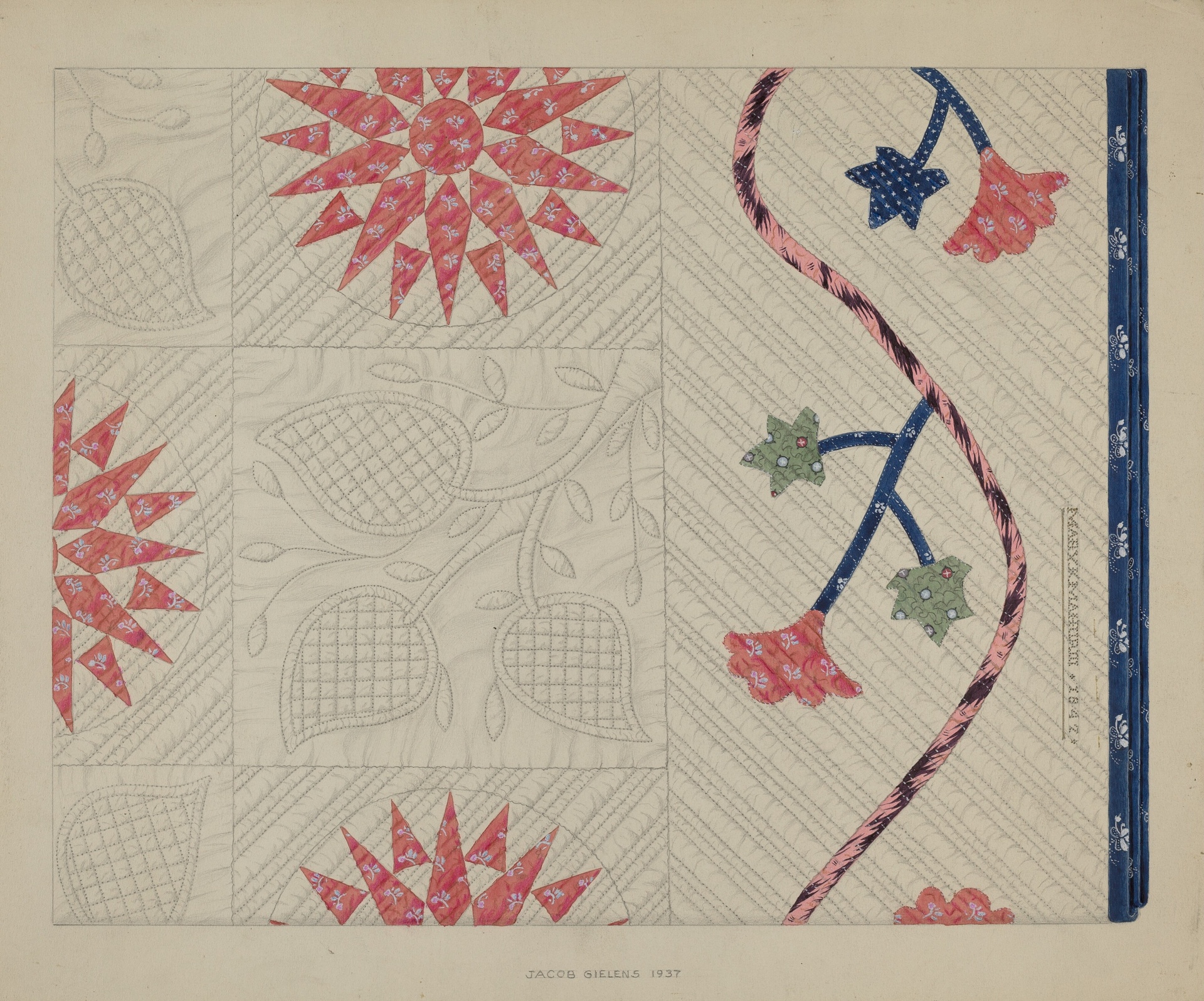
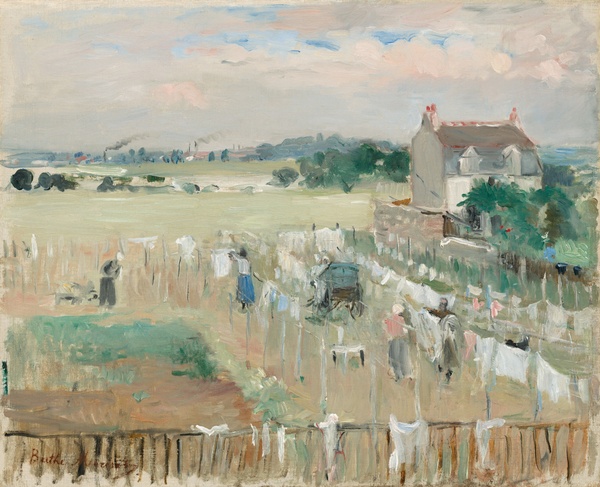
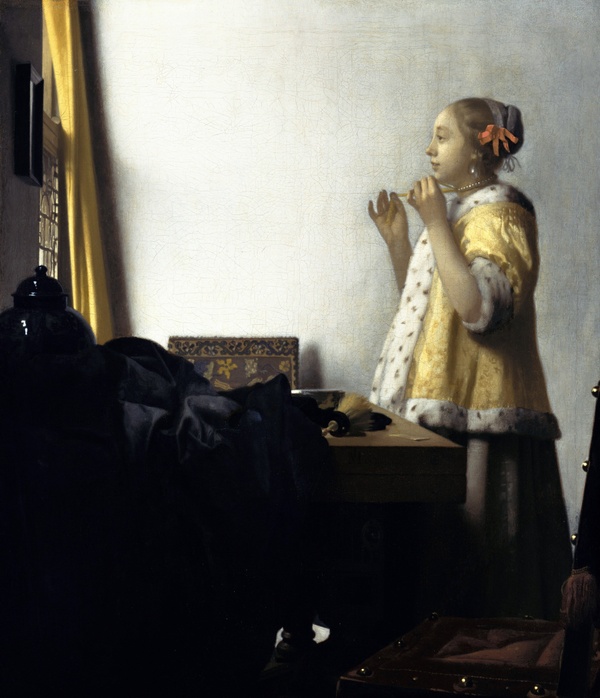
The rhythm of daily life offers its own quiet acts of renewal. Berthe Morisot's Hanging the Laundry out to Dry and Johannes Vermeer’s luminous Young Woman with a Water Pitcher celebrate simple chores as rituals of cleansing and order. It is within these domestic realms that the literal "mending thread" becomes visible, a symbol of diligent creation and patient repair. Jules Breton’s A Peasant Girl Knitting, Berthe Morisot’s Young Woman Knitting, and Pasie Sewing in Bougival's Garden, along with Mary Cassatt’s Lydia Crocheting in the Garden at Marly, portray women absorbed in textile arts – acts of quiet resilience, transforming raw materials into comfort or utility. Cassatt’s Young Mother Sewing beautifully ties this craft to nurturing, underscoring the intergenerational comfort woven into fabric. Ultimately, Jacob Gielens' Quilt stands as a vibrant testament to this collective spirit of mending, a patchwork of resilience, where disparate pieces are brought together to create warmth and wholeness.
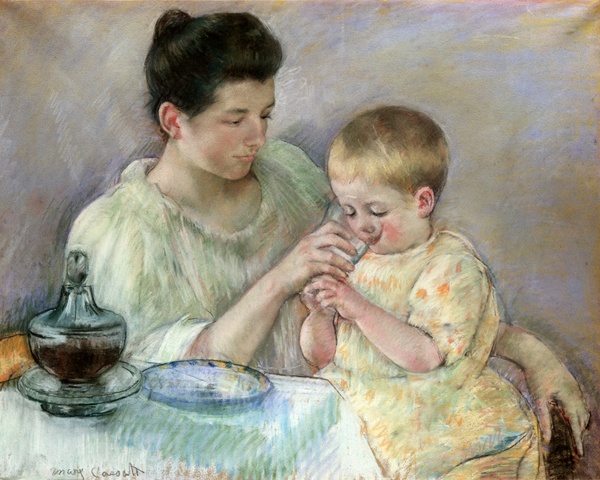
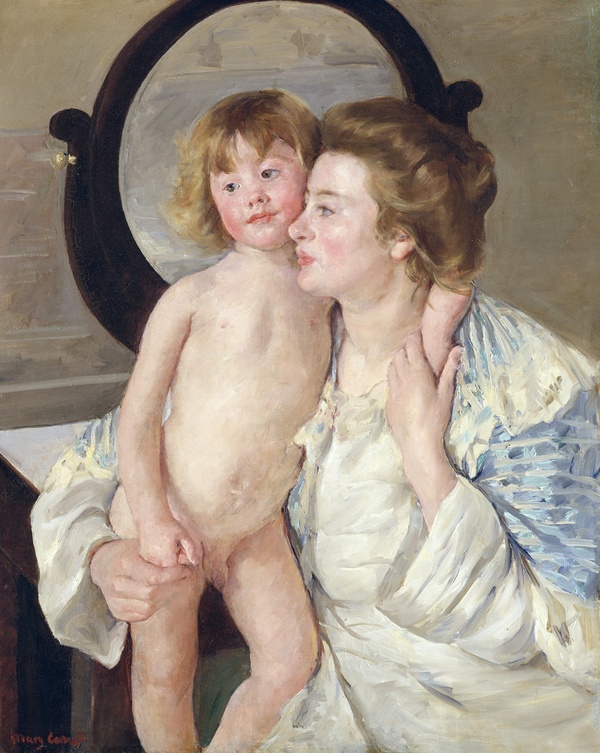
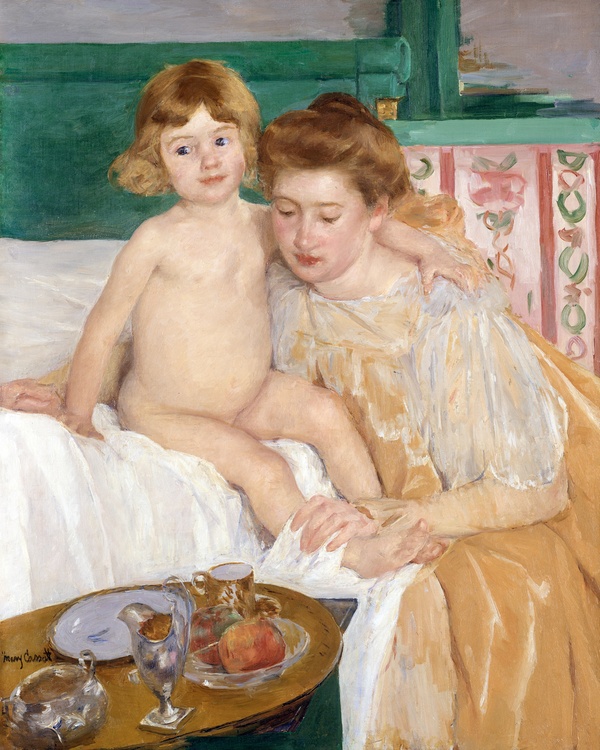
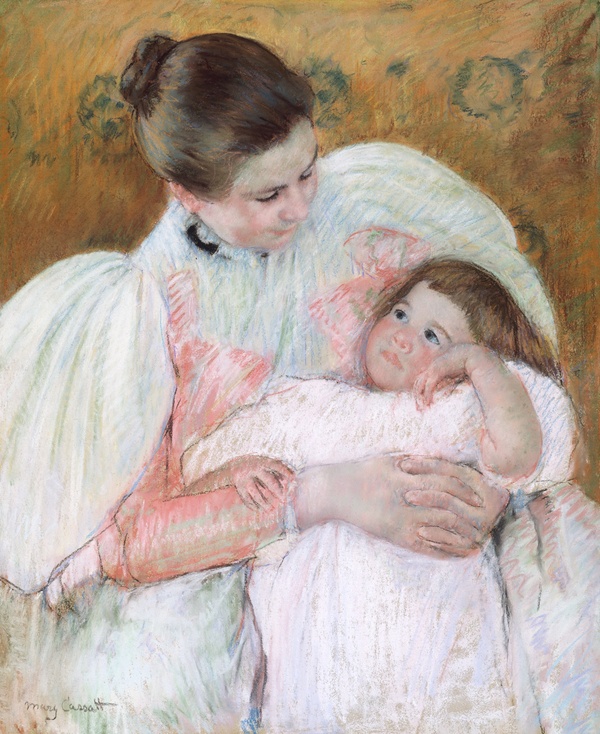
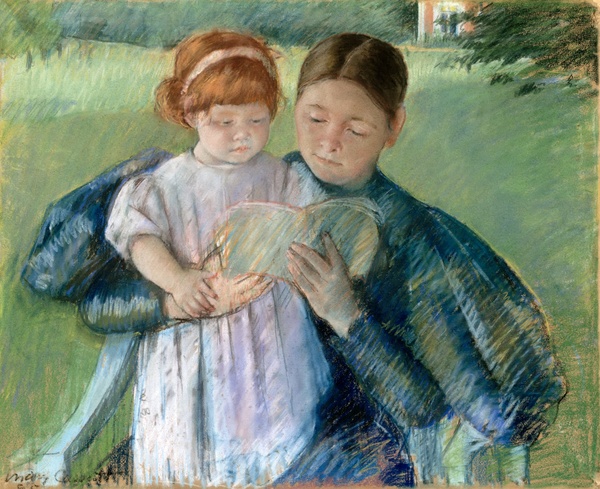
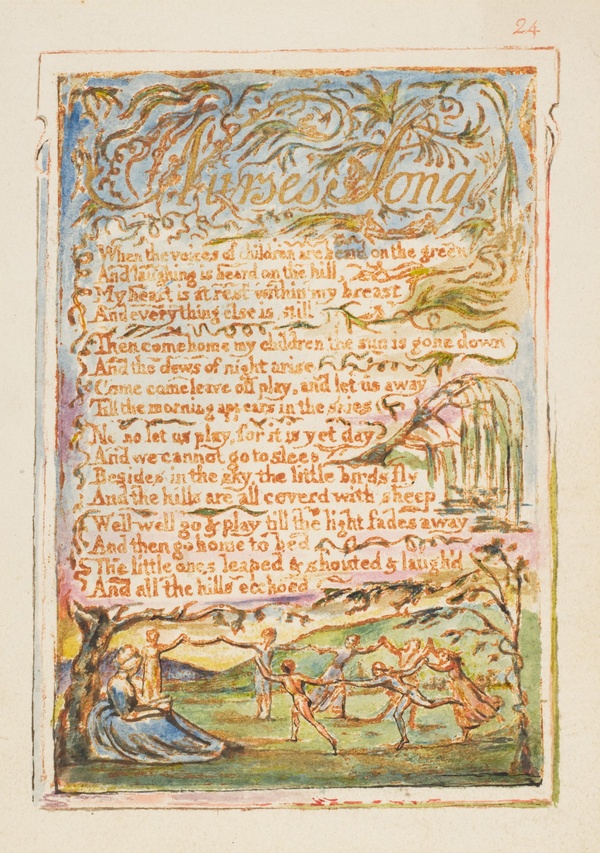
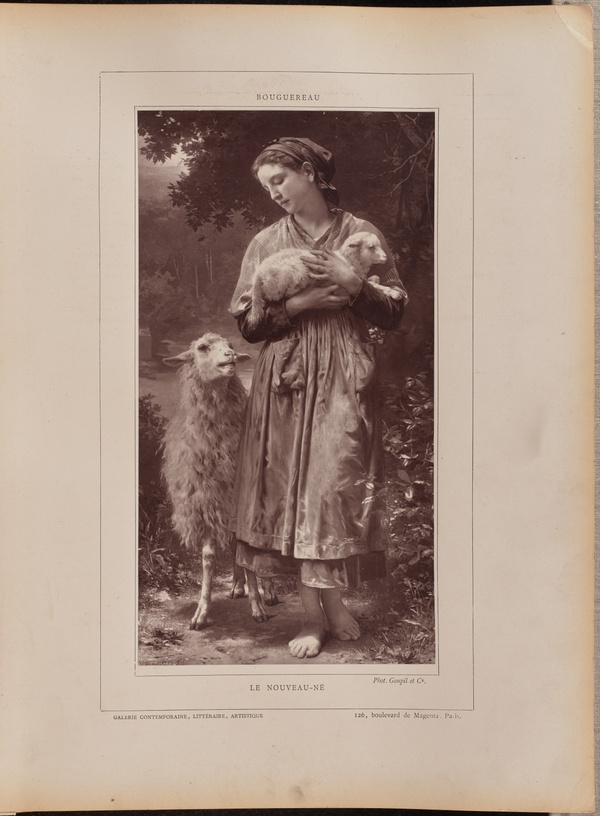
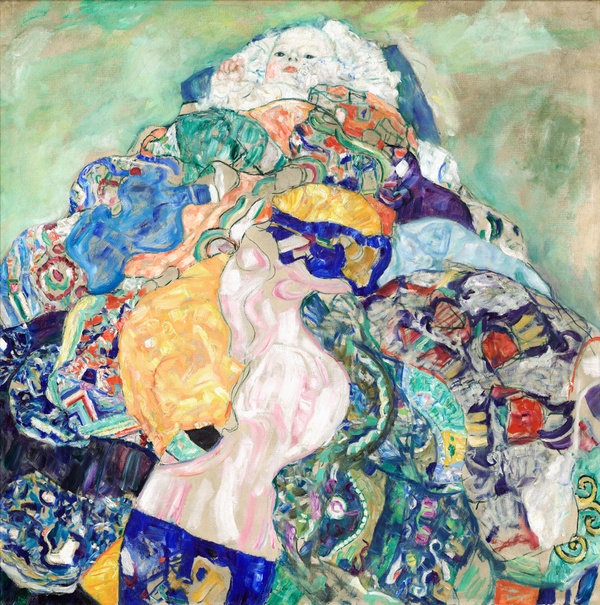
The thread of healing extends into the sacred realm of new life and nurturing bonds. Georges de La Tour’s evocative Le Nouveau-Né bathes the miracle of birth in a reverent, candlelit glow, emphasizing its profound vulnerability and preciousness. Gustav Klimt’s Baby (Cradle) further cradles this nascent life in a vibrant, protective embrace. Mary Cassatt, a master of maternal intimacy, shows us the foundational acts of care in Mother Feeding Child, the adoring gaze in Mother and Child (The Oval Mirror), and the gentle daily routine of Mother and Child (Baby Getting Up from His Nap). The role of caregivers is further highlighted in her Nurse and Child and Nurse Reading to a Little Girl, embodying comfort and intellectual nourishment. William Blake’s poetic Songs of Innocence and of Experience: Nurse's Song adds a lyrical dimension to this watchful, nurturing presence, celebrating growth and freedom.
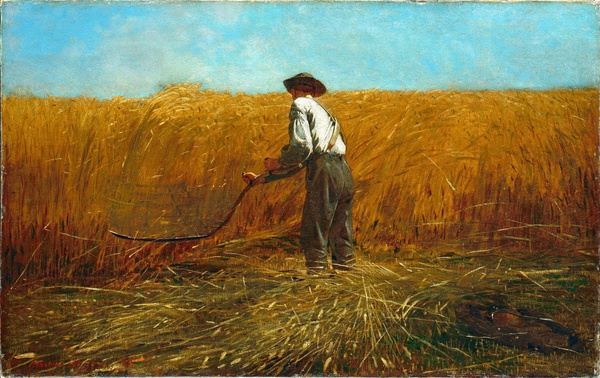
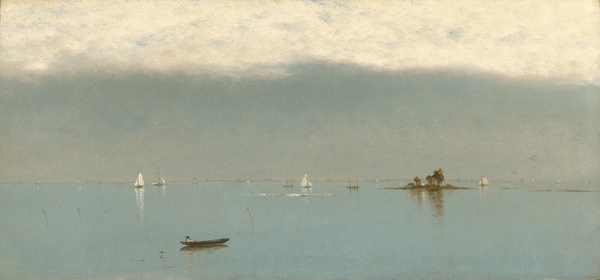
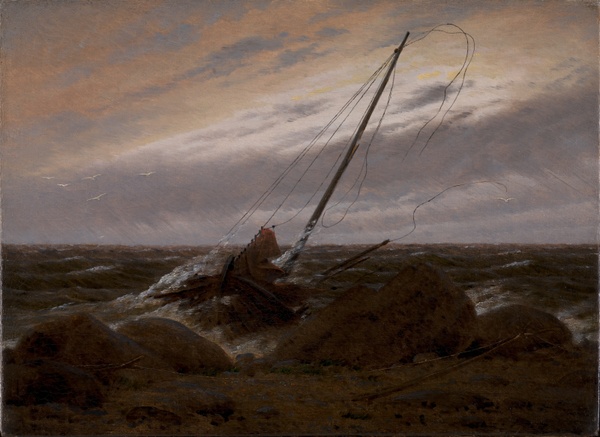
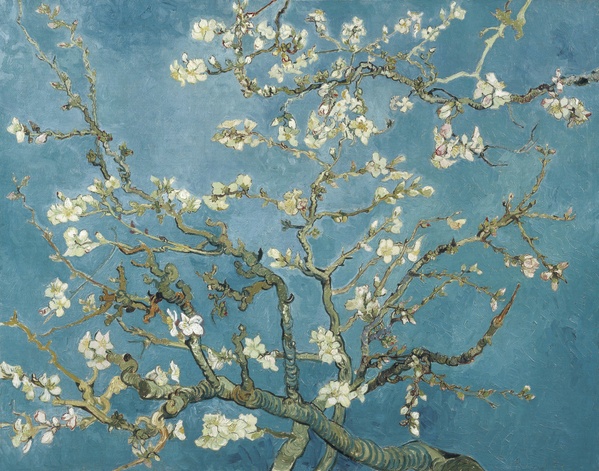
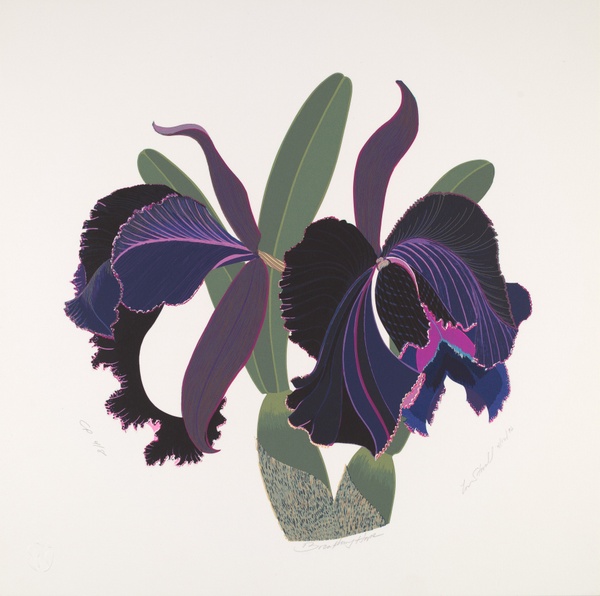
As our journey nears its end, we witness renewal after adversity. Vincent van Gogh’s vibrant Almond Blossom bursts forth with the promise of spring, a fragile yet powerful symbol of rebirth. Lou Stovall’s serene Breathing Hope invites contemplation, a quiet affirmation of nature's enduring promise. Winslow Homer’s The Veteran in a New Field depicts a soldier trading his weapon for a scythe, finding new purpose and healing in the earth's bounty after the devastation of war. John Frederick Kensett’s tranquil Passing off of the Storm and Caspar David Friedrich’s reflective After the Storm capture the serene aftermath of turbulent weather, nature’s own cycle of cleansing and calm.
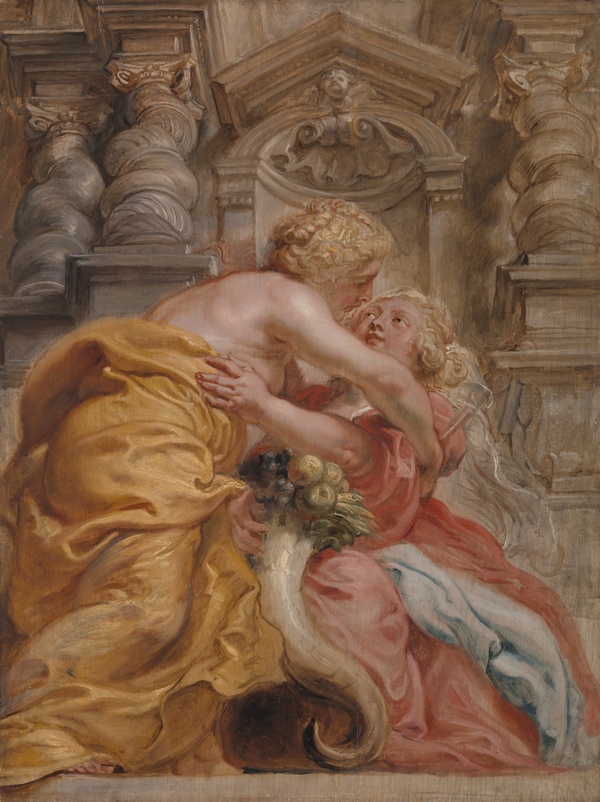
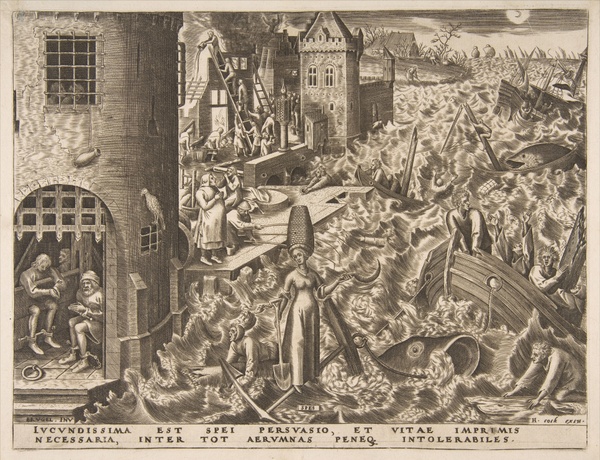
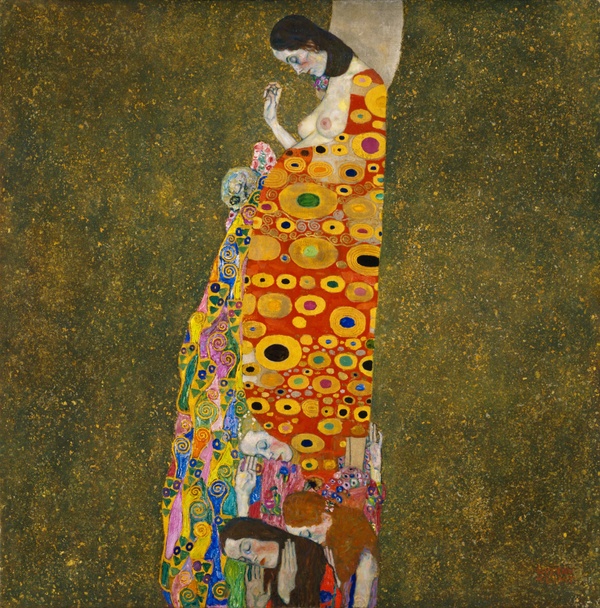
Finally, we arrive at the allegories of enduring hope and ultimate peace. Pieter Bruegel the Elder’s Hope (Spes), from The Virtues anchors us in steadfastness amidst life's tumultuous seas. Gustav Klimt’s profound Hope, II boldly presents a pregnant figure, a powerful symbol of future generations and unwavering resilience, even as darkness looms. Peter Paul Rubens’ magnificent Peace Embracing Plenty culminates this visual symphony, offering a radiant vision of harmony and abundance, where all wounds are healed, and the mending thread has woven a complete, beautiful narrative of restoration.
Artworks in this collection

30 artworks
The Reconciliation of the Montagues and Capulets over the Dead Bodies of Romeo and Juliet - Frederic Leighton (1855)

The Reconciliation of the Montagues and Capulets over the Dead Bodies of Romeo and Juliet - Frederic Leighton (1855)

Frederic Leighton

United Kingdom, 1855

The artwork depicts 'The Reconciliation of the Montagues and Capulets,' a direct narrative of mending a profound societal fracture after loss, embodying healing and restoration.

Luca Signorelli Painting his Dead Son - Frederic Leighton (1851)

Luca Signorelli Painting his Dead Son - Frederic Leighton (1851)

Frederic Leighton

United Kingdom, 1851

The poignant act of 'Luca Signorelli Painting his Dead Son' represents an artistic and emotional act of remembrance and processing grief, a form of mending the spiritual wound through creation.

The Wounded Goetz Cared for by the Bohemians - Eugène Delacroix (1836)
Premium

The Wounded Goetz Cared for by the Bohemians - Eugène Delacroix (1836)

Eugène Delacroix

France, 1836

This artwork shows 'The Wounded Goetz Cared for by the Bohemians,' a clear visual narrative of physical and emotional care, representing the act of healing and mending.

The Wounded Foot - Joaquín Sorolla (1909)
Premium

The Wounded Foot - Joaquín Sorolla (1909)

Joaquín Sorolla

Spain, 1909

'The Wounded Foot' is a direct depiction of injury and the implied need for care and healing, making it highly relevant to the 'mending' aspect of the theme.

Christ Washing the Disciples' Feet - Garofalo (1522)

Christ Washing the Disciples' Feet - Garofalo (1522)

Garofalo

Italy, 1522

The theme of 'Christ Washing the Disciples' Feet' symbolizes humility, service, and spiritual cleansing, a profound act of mending and renewal for the soul.

Drydock at Durgerdam - Piet Mondrian (1898–1899)
Premium

Drydock at Durgerdam - Piet Mondrian (1898–1899)

Piet Mondrian

Netherlands, 1898

'Drydock at Durgerdam' explicitly shows ships in a drydock, undergoing maintenance and repair, a direct visual metaphor for mending and restoration.

Hanging the Laundry out to Dry - Berthe Morisot (1875)
Premium

Hanging the Laundry out to Dry - Berthe Morisot (1875)

Berthe Morisot

France, 1875

'Hanging the Laundry out to Dry' symbolizes cleansing, renewal, and the quiet, restorative rhythms of domestic life.

Young Woman with a Water Pitcher - Johannes Vermeer (c. 1662)

Young Woman with a Water Pitcher - Johannes Vermeer (c. 1662)

Johannes Vermeer

Netherlands, 1662

'Young Woman with a Water Pitcher' evokes a sense of domesticity, care, and the simple, serene acts of daily life that sustain and restore.

A Peasant Girl Knitting - Jules Breton (ca. 1870)
Premium

A Peasant Girl Knitting - Jules Breton (ca. 1870)

Jules Breton

France, 1870

'A Peasant Girl Knitting' is another direct representation of knitting, emphasizing the quiet, industrious act of creation and mending with thread.

Young Woman Knitting - Berthe Morisot (ca. 1883)
Premium

Young Woman Knitting - Berthe Morisot (ca. 1883)

Berthe Morisot

France, 1883

'Young Woman Knitting' literally depicts the act of creating or mending fabric with thread, a core visual element for the theme 'The Mending Thread'.

Pasie Sewing in Bougival's Garden - Berthe Morisot (1881)
Premium

Pasie Sewing in Bougival's Garden - Berthe Morisot (1881)

Berthe Morisot

France, 1881

'Pasie Sewing in Bougival's Garden' directly illustrates the act of sewing, a literal representation of working with a 'mending thread' and domestic creation.

Lydia Crocheting in the Garden at Marly - Mary Cassatt (1880)
Premium

Lydia Crocheting in the Garden at Marly - Mary Cassatt (1880)

Mary Cassatt

United States, 1880

'Lydia Crocheting in the Garden at Marly' directly illustrates the quiet act of stitching and creating fabric, a literal 'mending thread' motif, symbolizing domestic tranquility and creation.

Young Mother Sewing - Mary Cassatt (1900)
Premium

Young Mother Sewing - Mary Cassatt (1900)

Mary Cassatt

United States, 1900

'Young Mother Sewing' directly combines nurturing with the literal act of sewing, representing both domestic care and the mending or creation of fabric.

Quilt - Jacob Gielens (c. 1938)
Premium

Quilt - Jacob Gielens (c. 1938)

Jacob Gielens

USA, 1938

The 'Quilt' by Jacob Gielens directly represents the act of 'stitching' and 'reassembling' disparate pieces into a harmonious whole, making it a literal embodiment of the theme.

Le Nouveau-Né - Georges de La Tour (c. 1645–1648)
Premium

Le Nouveau-Né - Georges de La Tour (c. 1645–1648)

Georges de La Tour

France, 1645

'Le Nouveau-Né' depicts the tender intimacy of new life, emphasizing protection, nurturing, and the profound hope associated with new beginnings.

Baby (Cradle) - Gustav Klimt (1917/1918)
Premium

Baby (Cradle) - Gustav Klimt (1917/1918)

Gustav Klimt

Austria, 1917

'Baby (Cradle)' embodies new life, nurturing, and hope for the future, representing the continuous cycle of mending and renewal in human existence.

Mother and Child (The Oval Mirror) - Mary Cassatt (c. 1899)
Premium

Mother and Child (The Oval Mirror) - Mary Cassatt (c. 1899)

Mary Cassatt

United States, 1899

'Mother and Child (The Oval Mirror)' depicts an intimate bond, nurturing, and comfort, symbolizing emotional mending and unconditional love.

Mother Feeding Child - Mary Cassatt (1898)
Premium

Mother Feeding Child - Mary Cassatt (1898)

Mary Cassatt

United States, 1898

'Mother Feeding Child' is a primal scene of nurturing and sustenance, representing the continuous act of care and the mending of hunger and dependency.

Mother and Child (Baby Getting Up from His Nap) - Mary Cassatt (ca. 1899)
Premium

Mother and Child (Baby Getting Up from His Nap) - Mary Cassatt (ca. 1899)

Mary Cassatt

United States, 1899

'Mother and Child (Baby Getting Up from His Nap)' showcases a tender, nurturing moment, emphasizing comfort and the gentle rhythm of daily life and care.

Nurse and Child - Mary Cassatt (1896–1897)

Nurse and Child - Mary Cassatt (1896–1897)

Mary Cassatt

United States, 1896

'Nurse and Child' embodies the essence of nurturing, care, and the silent work of mending through human connection and dependency.

Nurse Reading to a Little Girl - Mary Cassatt (1895)
Premium

Nurse Reading to a Little Girl - Mary Cassatt (1895)

Mary Cassatt

United States, 1895

'Nurse Reading to a Little Girl' illustrates a tender moment of care and education, symbolizing the nurturing of minds and emotional bonds, a quiet act of mending and growth.

Songs of Innocence and of Experience: Nurse's Song - William Blake (ca. 1825)
Premium

Songs of Innocence and of Experience: Nurse's Song - William Blake (ca. 1825)

William Blake

England, 1825

'Nurse's Song' by William Blake captures innocence, care, and pastoral harmony, representing the gentle nurturing and mending of childhood.

Almond Blossom - Vincent van Gogh (1890)
Premium

Almond Blossom - Vincent van Gogh (1890)

Vincent van Gogh

Netherlands, 1890

'Almond Blossom' by Van Gogh is a powerful symbol of spring, rebirth, hope, and new beginnings, representing nature's cycle of renewal.

Breathing Hope - Lou Stovall (1996)
Premium

Breathing Hope - Lou Stovall (1996)

Lou Stovall

USA, 1996

'Breathing Hope,' as an abstract piece, directly expresses the aspirational aspect of the theme, suggesting renewal and resilience on a conceptual level.

The Veteran in a New Field - Winslow Homer (1865)
Premium

The Veteran in a New Field - Winslow Homer (1865)

Winslow Homer

USA, 1865

'The Veteran in a New Field' profoundly illustrates transition and healing, representing the soldier's return to a peaceful, productive life after the 'fracture' of war.

Passing off of the Storm - John Frederick Kensett (1872)

Passing off of the Storm - John Frederick Kensett (1872)

John Frederick Kensett

USA, 1872

'Passing off of the Storm' visually depicts the return to calm and clarity after turbulence, signifying natural restoration and resilience.

After the Storm - Caspar David Friedrich (1817)
Premium

After the Storm - Caspar David Friedrich (1817)

Caspar David Friedrich

Germany, 1817

'After the Storm' visually portrays the return to tranquility and healing after a period of turbulence, a clear narrative of restoration in nature.

Hope (Spes), from The Virtues - Pieter Bruegel the Elder (1559–1560)
Premium

Hope (Spes), from The Virtues - Pieter Bruegel the Elder (1559–1560)

Pieter Bruegel the Elder

Netherlands, 1559

'Hope (Spes)' from Bruegel the Elder's 'The Virtues' embodies the essential quality of resilience and the anticipation of overcoming adversity, a spiritual mending.

Hope, II - Gustav Klimt (1907-1908)
Premium

Hope, II - Gustav Klimt (1907-1908)

Gustav Klimt

Austria, 1908

Titled 'Hope, II,' this artwork directly conveys the theme of resilience and the enduring human spirit, signifying emotional mending and looking toward restoration.

Peace Embracing Plenty - Peter Paul Rubens (1633–1634)

Peace Embracing Plenty - Peter Paul Rubens (1633–1634)

Peter Paul Rubens

Flanders (modern-day Belgium), 1633

'Peace Embracing Plenty' is an allegorical representation of harmony, abundance, and the restoration of a prosperous state, directly aligning with the theme's core message.

Discover more curated collections

View all collections